How Many Tons of Gravel Do You Need?
A Practical Sea to Sky Guide
“How much gravel do I need?”
It’s one of the most common questions—and one that can make or break a budget.
In the Sea to Sky, from Squamish to Whistler to Pemberton, ground conditions, slope, and access all influence how much material you’ll actually use. Here’s how we recommend getting to a figure. ↓
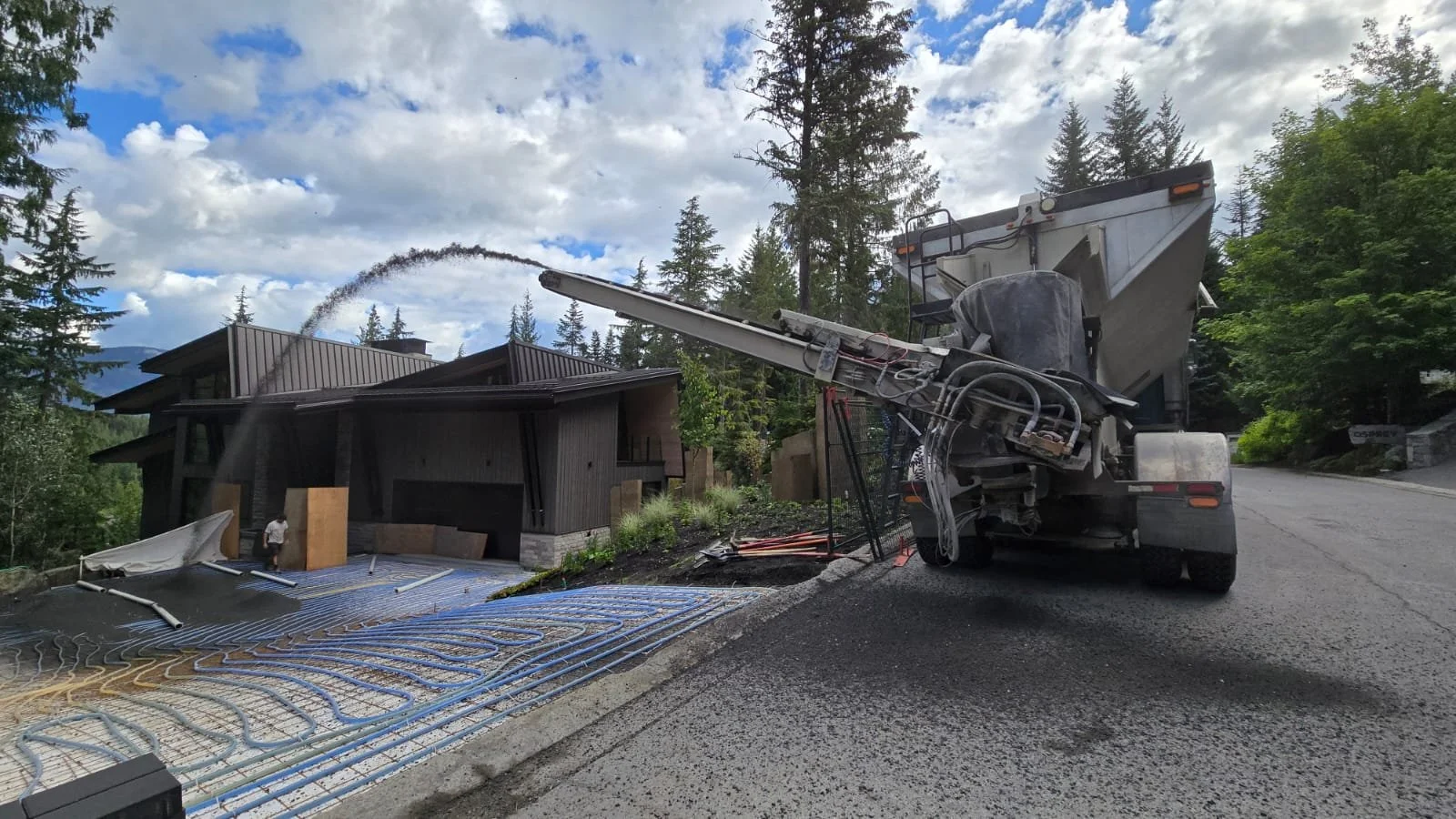
Start With the Basic Calculation
The standard formula is:
Length × Width × Depth = Volume
From there, you convert volume into tons depending on the material.
Here’s an example:
For a driveway that is 20 ft long x 10 ft wide x 4 inches deep
You’ll need roughly 10–12 tons of gravel.
That’s a very simple baseline—and you probably already knew that! But what you may not factor into your budget are the real-world conditions, which often change that number.
What Impacts Gravel Quantity in the Sea to Sky
1. Ground Conditions
Uneven or soft ground requires more material to create a stable base.
2. Compaction
Gravel settles over time. If you don’t account for compaction, you’ll come up short.
3. Slope and Drainage
In mountainous areas, slope plays a big role. You may need extra gravel to maintain proper grading and water flow.
4. Type of Gravel
Different aggregates compact differently. Road base behaves very differently from clear crush.
Where Most Projects Go Wrong
Underestimating depth, forgetting about compaction or ordering the right amount but placing it poorly, resulting in wastage.
This is where time and money slip away.
I know everyone wishes there was a clean, simple answer to “How much gravel do I need?” — but like most things in the Construction Industry, it’s rarely black and white.
Ground conditions, drainage, slope, compaction, and access all change the numbers. A driveway in Squamish can need something completely different from a rural property in Pemberton or a tight build in Whistler.
Sorry to be the bearer of bad news. 😄
The good news is that getting advice early usually saves a lot of headaches later.
With more than 20 years of experience working in the Sea to Sky corridor, Drew advises with local knowledge and practical industry expertise that helps homeowners, builders, and contractors avoid costly mistakes before the gravel even hits the ground.
Whether you’re unsure about quantities, drainage, access, or the right aggregate for the job, reaching out for guidance can help keep the project running smoothly from the start.
If you’ve got questions about your site, contact us for practical advice and an accurate estimate before getting started.
How Many tons of gravel can a slinger truck hold?
When it comes to delivery, a slinger truck can typically carry and place anywhere from 12 to 18 tonnes per load, depending on the setup and material.
Frequently Asked Questions
What depth of gravel do I need for a driveway?
Typically 4–6 inches, depending on usage and base conditions.
How do I calculate gravel for uneven ground?
Add extra material to account for dips and soft spots. It’s better to plan slightly over than come up short mid-project.
Can gravel be spread without heavy manual labour?
Yes. A slinger truck can place and spread gravel evenly across the site in one step, helping reduce the back-breaking workload that comes with moving massive piles of material by hand.
While some manual work is still involved. Depending on the project, accurate placement dramatically reduces extra shovelling, wheelbarrow trips, machine movement, and unnecessary rework across the site.