Whistler Aggregates: Choosing the Right Material for Your Project
Working with aggregates in Whistler and the Sea to Sky is about far more than simply ordering gravel and spreading it around a site.
Mountain weather, heavy rainfall, freeze-thaw cycles, drainage, and steep or tight access properties all affect how materials perform over time. Choosing the right aggregate helps create a stronger foundation, improves drainage, and reduces costly repairs later on.
Whether you’re building a driveway, preparing a foundation, landscaping a property, or improving drainage around your home, understanding the purpose of each aggregate material before you spend is imperative.
Common Types of Aggregates in Whistler
Road Base
Road base is one of the most commonly used aggregate materials across the Sea to Sky. It’s designed to compact tightly, creating a stable foundation for driveways, parking areas, pathways, and construction projects.
In places like Whistler and Pemberton where ground movement and moisture can become an issue, a properly compacted road base helps prevent sinking, shifting, and rutting over time.
Road base is commonly used for:
Driveways
Parking pads
Under paving stones
Structural base preparation
Access roads for construction sites
Without the correct base layer underneath, even the best-looking finished surface can quickly begin to fail.
Drain Rock
Drain rock is essential throughout the Sea to Sky because water management is such a major factor in long-term site performance.
This material allows water to move through it rather than pooling on the surface. It’s often installed around foundations, retaining walls, drainage systems, septic fields, and areas prone to standing water.
In high rainfall regions like Whistler and Squamish, poor drainage can lead to erosion, flooding, icy surfaces in winter, and damage to landscaping or structures.
Drain rock helps reduce those risks while improving the longevity of the project.
Gravel
Gravel is one of the most versatile aggregate materials available. Different sizes and styles can be used for both practical and decorative purposes.
It’s commonly used for:
Driveways
Garden pathways
Landscaping features
Rural property access roads
Parking areas
Around fire pits or outdoor living spaces
Many Sea to Sky property owners choose gravel because it performs well in changing weather conditions while still creating a natural mountain aesthetic that suits the surrounding environment.
The right gravel size also affects drainage, compaction, traction, and overall appearance, so choosing the correct product for the project matters.
Sand
Sand is often used as a levelling material and base layer beneath paving stones, patios, utility installations, and landscaping projects.
It helps create a smoother, more stable surface while improving the accuracy of final grading and finishing work.
In construction and landscaping projects across the Sea to Sky, sand is commonly used for:
Paver preparation
Levelling uneven ground
Bedding pipes and utilities
Mixing concrete
Base preparation beneath aggregate layers
Even though it’s one of the simpler materials on-site, proper sand placement still plays an important role in the final result.
Why Placement Matters in Whistler
In the Sea to Sky, access is rarely simple.
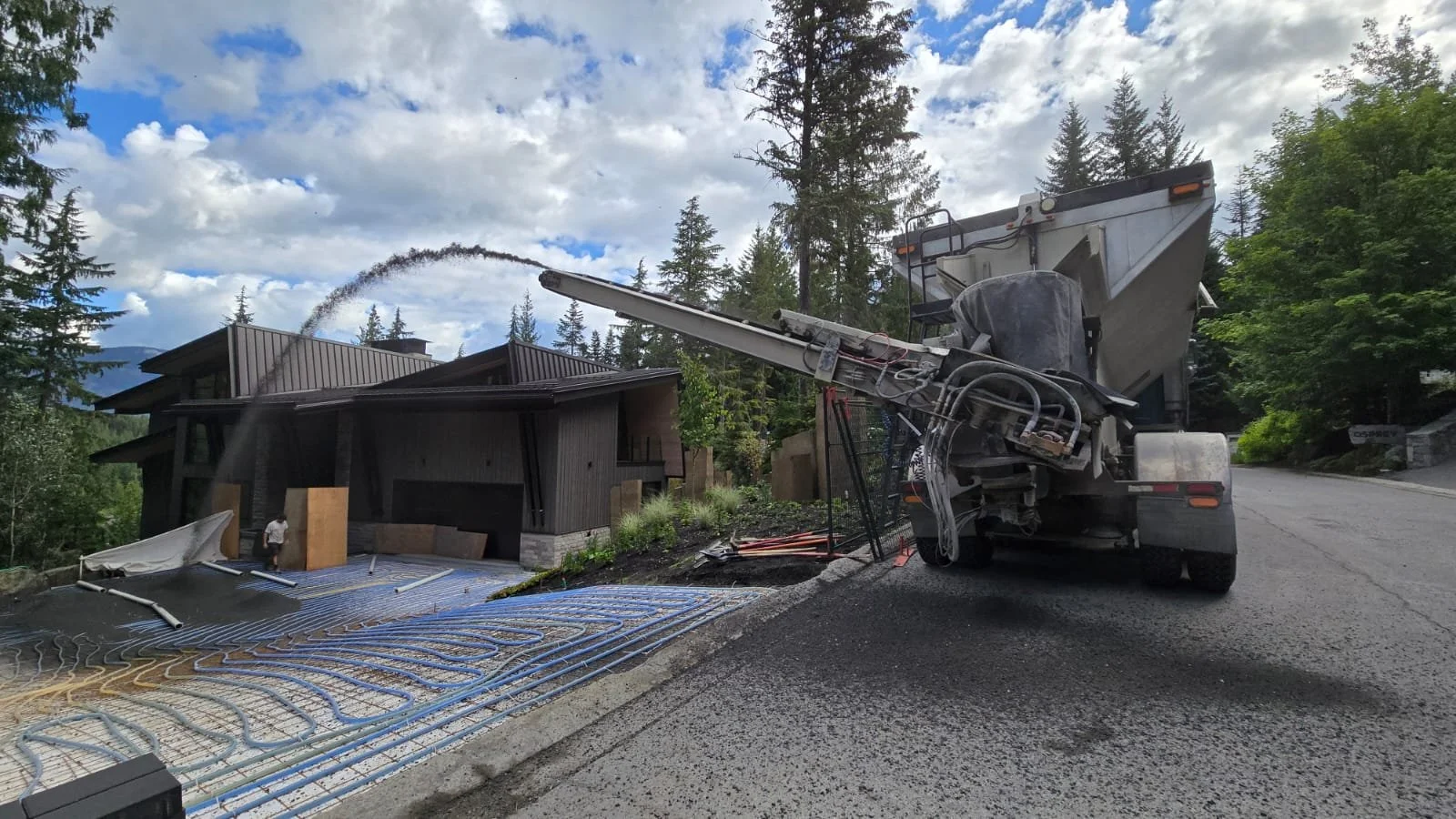
Steep driveways, narrow lots, surrounding landscaping, and limited space can make traditional aggregate placement difficult and time-consuming. Using a slinger truck or telebelt allows aggregates to be placed far more accurately exactly where they’re needed.
This helps:
Create more even coverage
Improve drainage performance
Reduce manual labour
Reach difficult access areas
Minimise disruption to the site
Reduce cleanup and material waste
For many projects in Whistler, Squamish, and Pemberton, efficient placement can save both time and money while streamlining your project.
Local Insight
Every Sea to Sky property is different. Soil conditions, elevation, rainfall, drainage patterns, and site access all affect which aggregate material will perform best.
The right aggregate creates the foundation. Proper placement is what helps that foundation last.
If you’re planning a landscaping, drainage, or construction project in the Sea to Sky corridor, getting the right advice early can help avoid costly issues later on.
👉 Explore completed projects and see how aggregate placement works utilising slinger and telebelt machinery on our Projects page.
Contact Drew today for an estimate and find the right aggregate placement solution for your site.
Frequently Asked Questions
What type of aggregate is best for driveways in Whistler?
Road base is commonly used because it compacts well and provides a strong foundation.
Why is drainage important when using aggregates?
Poor drainage leads to erosion and uneven surfaces, especially in high rainfall areas like Whistler.
Can aggregates be placed over fences or tight areas?
Yes, using a slinger truck or telebelt allows for precise placement in hard-to-reach areas.