What Is a Conveyor Telebelt and How Does It Help Construction Projects?
Some equipment is easy to understand the second you see it…
A dump truck dumps.
An excavator digs.
A stone slinger slings material.
A conveyor telebelt is a little less obvious at first, but once you understand what it does, it quickly becomes one of the most useful tools on a construction site.
A telebelt is a truck-mounted telescopic conveyor system that places material quickly and accurately. It is commonly used for concrete, sand, gravel, aggregates and other loose materials. Instead of relying on wheelbarrows, loaders or repeated machine movement, the conveyor reaches out from the truck and places material directly where it is needed.
While a stone slinger is often the fastest solution for spreading aggregates and landscaping materials, a telebelt works alongside it by handling jobs that require greater reach, precision or concrete placement. Together, they allow contractors to place a wide range of materials efficiently, even on difficult sites.
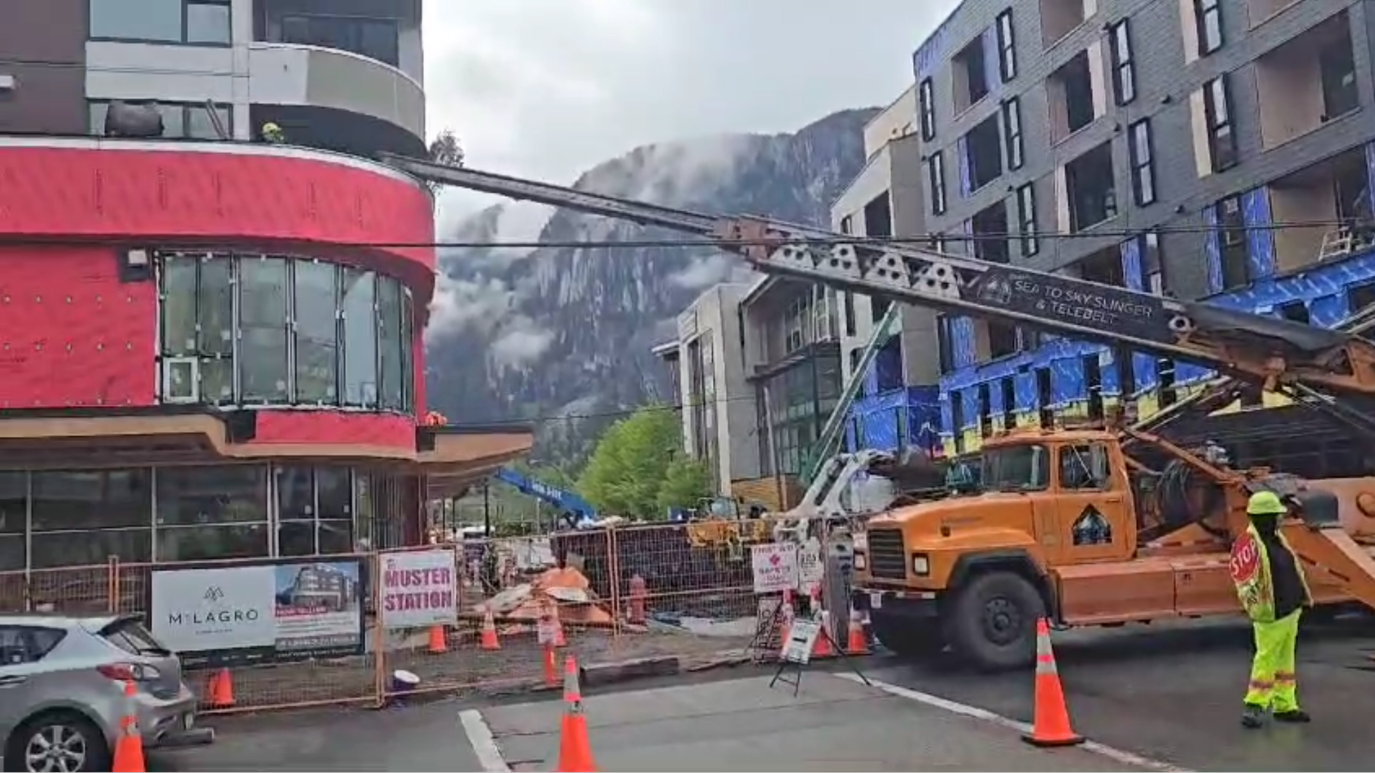
What Is a Conveyor Telebelt?
A conveyor telebelt is a telescopic belt conveyor mounted on a truck.
The conveyor extends and retracts, allowing operators to reach placement areas that may be difficult to access with traditional equipment.
Material is fed onto the belt and carried to the discharge point, where it can be placed with a high degree of control and accuracy.
Although telebelts are well known in the concrete industry, they can also place sand, gravel, aggregates, drain rock and other loose materials. This versatility makes them valuable on modern construction sites.
Why Were Conveyor Telebelts Invented?
Construction has always had one major challenge: moving material.
Concrete, gravel, sand and aggregate are heavy, and they are rarely needed exactly where a truck can park.
Traditionally, material is delivered and then moved again using loaders, skid steers, wheelbarrows or labour crews. On sites with limited access, that process can be slow and expensive.
Telebelts were developed to make material placement more efficient. Instead of moving material across the ground in multiple steps, the conveyor carries it directly from the truck to the placement area.
The result is less handling, faster placement and better control.
How Does a Conveyor Telebelt Work?
A conveyor telebelt uses a belt system to move material from the truck to the placement location.
Material is loaded onto the belt, carried along the boom and discharged where it is needed. The operator can adjust the conveyor's reach, position and direction to suit the site.
This is especially useful when material needs to go:
Over obstacles
Across soft ground
Into foundation areas
Behind structures
Down or across a slope
Into tight access zones
Around finished landscaping
Because the conveyor can extend and move, the truck often stays in one position, reducing equipment movement and saving time.
Telebelt vs Stone Slinger: What's the Difference?
Telebelts and stone slingers are often used on the same types of projects, but they serve different purposes.
A stone slinger uses a high-speed conveyor to spread aggregates, soils and landscaping materials quickly over large areas. It excels at efficient bulk placement.
A telebelt uses a telescopic conveyor boom that provides greater reach and more precise placement.
This is what makes the combination so effective and that’s why we use both!
The slinger moves the material efficiently from the truck, while the conveyor gives us extended reach and precise placement.
That could mean placing material up to a two-storey balcony, reaching over finished landscaping, feeding material into a tight-access build area, or placing it exactly into an elevated section of a property.
For a better visual of what this setup can do, visit our Projects page to see recent jobs and how we’ve put the trucks to work across the Sea to Sky.
How Far Can a Conveyor Telebelt Reach?
Reach depends on the machine.
Some telebelt models offer around 80 feet of horizontal reach, while larger units can exceed 120 feet and, in some equipment classes, approach 200 feet.
That reach allows material to be placed in areas that would otherwise require additional equipment, labour or time.
Final Thoughts
It helps place concrete, aggregates and other materials quickly, accurately and efficiently. It reduces extra handling, reaches difficult areas and works alongside stone slingers to give contractors more flexibility on site.
For builders, landscapers, developers and homeowners in the Sea to Sky, that can make a challenging project much easier to manage.
Because material delivery is only part of the job.
The real value comes from getting that material exactly where it needs to go.
If you are planning a project and need soil, gravel, sand, drain rock, road base or aggregates delivered and placed efficiently, contact Drew’s Sea to Sky Slinger & Telebelt for an estimate.
Frequently Asked Questions
Is a telebelt only for concrete?
No. While telebelts are well known for concrete placement, they can also be used for many aggregate and loose material applications.
Why use a telebelt instead of moving material by hand?
A telebelt can reduce manual labour, speed up material placement, improve accuracy and help reach areas with limited access.
Can a telebelt place gravel and aggregates?
Yes. Depending on the model and material, telebelts can place sand, gravel, aggregates, drain rock and other loose materials.