What Is a Stone Slinger?
If you have ever had a load of gravel dumped at the front of a property and then spent hours moving it by wheelbarrow, you already understand why stone slingers exist.
A stone slinger is designed to solve one of the most time-consuming parts of construction and landscaping: getting heavy material exactly where it needs to go.
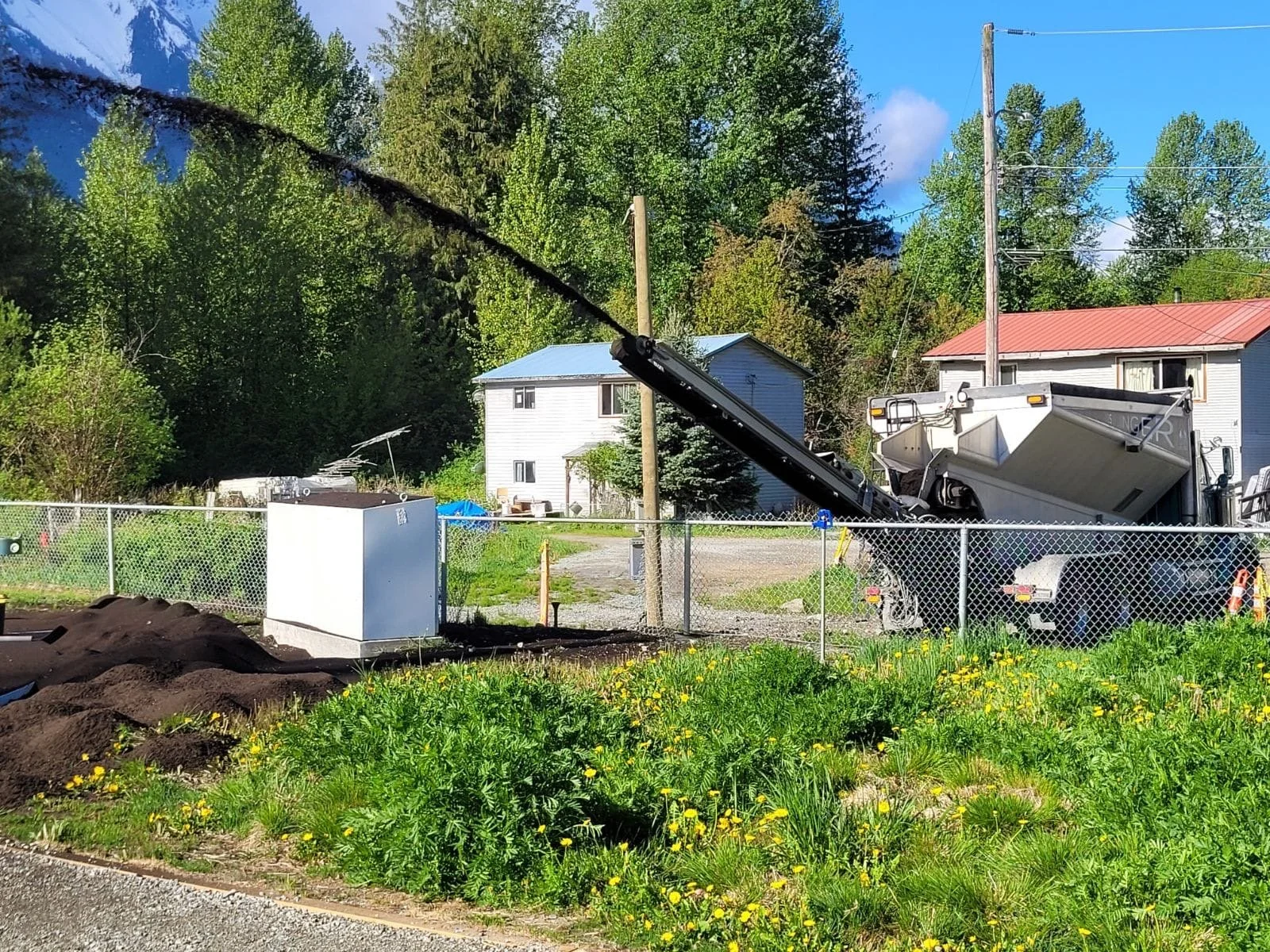
Instead of dumping soil, gravel, sand, drain rock, road base or other aggregates into one pile, a stone slinger uses a conveyor system to place material directly across the site. That might mean placing gravel behind a house, spreading soil across a yard, reaching over a fence, or filling around a foundation without relying on hours of manual labour.
Across the Sea to Sky, where projects often deal with steep driveways, tight access, sloped properties and limited space, this type of equipment makes a big difference.
From Whistler and Squamish to Pemberton and D’Arcy, a stone slinger can help move material faster, cleaner and more accurately than traditional delivery methods.
Where Did the Stone Slinger Come From?
The Stone Slinger™ was invented in 1976 by W. Keith Dahms, who saw a major problem on construction sites: crews were spending too much time and labour moving material after it had already been delivered.
At the time, dump trucks could bring gravel, soil and aggregate to a site, but they could only dump it in a pile. Workers then had to move the material by wheelbarrow, shovel or equipment to its final location. On larger projects, this was slow, expensive and physically demanding.
Dahms' solution was simple but revolutionary: mount a high-speed conveyor system onto a truck so it could both transport and place material. The result was the first Stone Slinger™, a machine designed to reduce labour, improve accuracy and speed up construction projects.
Nearly 50 years later, the same challenges still exist. The difference is that modern stone slingers solve them far more efficiently.
What Does a Stone Slinger Actually Do?
A stone slinger transports loose material and places it using a conveyor belt system. Sometimes known as a rock shooter or conveyor truck, depending on the region and equipment style.
The truck carries the material in its box. Once on site, the conveyor moves the material from the truck and "slings" it into position. Depending on the setup, the operator can control the direction, speed and placement of the material.
Many modern stone slingers also use wireless remote controls, allowing the operator to stand closer to the placement area rather than remaining inside the truck. This improves visibility, placement accuracy and safety, especially when working around foundations, retaining walls, landscaping or tight-access areas.
Instead of leaving material in one pile, a stone slinger can spread it more evenly and accurately across the area where it is needed.
How Far Can a Stone Slinger Place Material?
Reach depends on the truck, setup, material type and site conditions.
As a general industry guide, many stone slingers can place material roughly 70 to 100 feet from the truck.
The goal is not just distance. It is precision.
Because the operator can control placement much more accurately than a standard dump truck, there is often less waste, less cleanup and less time spent moving material after delivery.
How Much Material Can a Stone Slinger Hold?
The amount a stone slinger can carry depends on the truck, the material being hauled and road weight regulations.
Soil, sand, gravel and drain rock all have different weights, which affects how much can be transported in a single load.
For most projects, the important questions are:
How much area needs coverage?
What depth is required?
What material is being used?
Is the site flat or sloped?
Where can the truck safely park?
Once those details are known, it becomes much easier to estimate the required material and determine whether one load or multiple loads will be needed.
Final Thoughts
A stone slinger is one of those pieces of equipment that makes immediate sense once you see it work.
It was created by W. Keith Dahms to solve a simple but expensive problem: moving heavy material by hand takes too much time, labour and effort.
Today, modern stone slingers continue to solve that same problem, often with advanced conveyor systems and remote-control operation that improve both accuracy and efficiency.
Whether you are working on a landscaping project in Whistler, a tight-access site in Squamish, a rural property in Pemberton or a larger construction project anywhere in the Sea to Sky corridor, a stone slinger can help get material placed faster and more accurately.
Because getting material delivered is one thing.
Getting it placed exactly where you need it is another.
If you are planning a project and need soil, gravel, sand, drain rock, road base or aggregates delivered and placed efficiently, contact Drew’s Sea to Sky Slinger & Telebelt for an estimate.
Frequently Asked Questions
What materials can a stone slinger place?
Stone slingers commonly place gravel, soil, sand, compost, drain rock, road base, clear crush, mulch and other loose aggregate materials.
Do stone slingers use remote controls?
Many modern stone slingers use wireless remote controls (we sure do!) that allow operators to stand closer to the placement area. This improves visibility, placement accuracy and safety during material installation.
Is a stone slinger better than a dump truck?
It depends on the job. A dump truck is useful for hauling and dumping material, while a stone slinger is better when material needs to be placed accurately, spread out or delivered into tight-access areas.
Do stone slingers reduce manual labour?
Yes. Because the conveyor places material closer to where it is needed and spreads across the area, there is usually far less shovelling, wheelbarrowing and machine handling required after delivery.